April 2026 — Mobility & Urban Transport News
A quiet revolution is reshaping urban and suburban mobility. Once confined to golf courses and gated communities, golf carts are evolving into Low-Speed Vehicles (LSVs)—street-legal electric vehicles that are rapidly gaining traction as a practical solution for short-distance city travel.
In 2026, LSVs are no longer a niche category. They are becoming a key part of the broader shift toward smarter, cleaner, and more localized transportation systems.
What Are LSVs and Why Are They Growing?
Low-Speed Vehicles (LSVs) are electric vehicles typically designed to operate at speeds of up to 25 mph (40 km/h) and are allowed on roads with speed limits of 35 mph or less in many regions.
Originally derived from golf cart platforms, modern LSVs have evolved to include:
- Seat belts and enhanced safety features
- Headlights, turn signals, and mirrors
- Windshields and enclosed cabins (in some models)
- Compliance with local road regulations
This transformation has enabled golf carts to move beyond recreational use and enter urban and community transportation networks.
From Fairways to City Streets
The transition from golf carts to LSVs marks a significant shift in how these vehicles are used. Today, they are commonly found in:
- Residential neighborhoods
- Retirement communities
- University campuses
- Tourist destinations
- Industrial parks and logistics zones
In many of these environments, LSVs are replacing traditional cars for short trips, offering a more efficient and user-friendly alternative.
Key Drivers Behind the “Urbanization” of Golf Carts
1. Demand for Last-Mile Mobility
As cities become more congested, the need for efficient short-distance transportation—often referred to as “last-mile mobility”—has increased.
LSVs provide a practical solution for trips under 5 miles, where full-sized vehicles are often unnecessary.
2. Cost and Accessibility
Compared to conventional cars, LSVs are:
- More affordable to purchase
- Cheaper to operate and maintain
- Easier to drive and park
This makes them especially appealing to families, seniors, and communities seeking cost-effective mobility options.
3. Sustainability and Electrification
With growing pressure to reduce emissions, electric LSVs offer clear environmental advantages:
- Zero tailpipe emissions
- Lower energy consumption
- Reduced noise pollution
Cities and developers are increasingly incorporating LSVs into green mobility strategies.
4. Urban Design and Community Planning
Modern residential developments are being designed with LSVs in mind. Features such as:
- Dedicated golf cart paths
- Charging infrastructure
- Mixed-use layouts with nearby amenities
are making it easier for residents to rely on LSVs instead of cars.
Technology Is Accelerating the Shift
The rapid adoption of LSVs is also driven by technological advancements. Today’s vehicles feature:
-
Lithium battery systems with longer lifespan and faster charging
- Smart dashboards and connectivity features
-
Improved safety systems, including lighting and braking technologies
-
Extended driving range, making them viable for daily use
These innovations are narrowing the gap between LSVs and traditional compact electric vehicles.
Lexsong: Enabling the Next Phase of LSV Growth
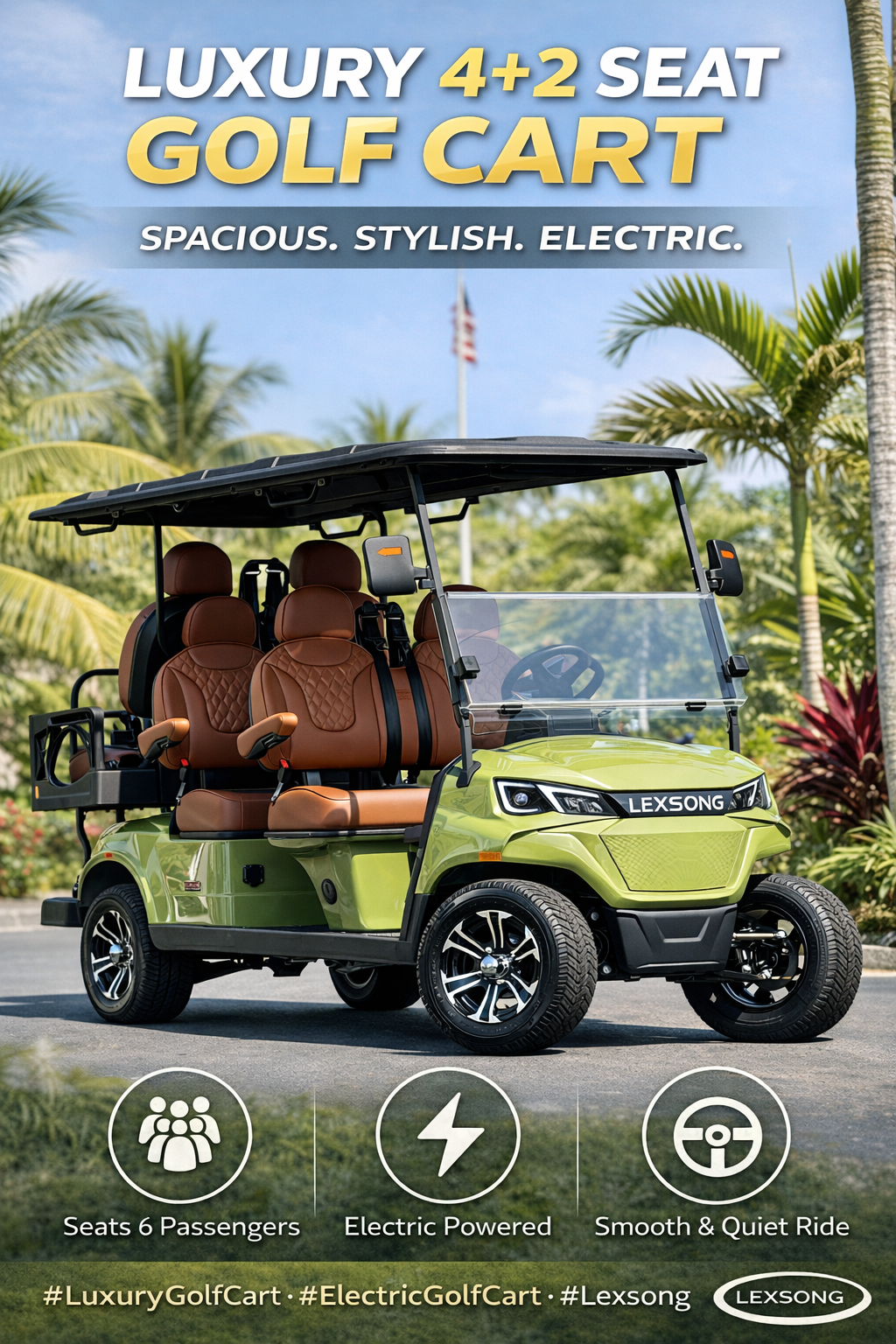
As the LSV market expands, manufacturers are stepping up to meet new expectations. Lexsong is one of the emerging companies focused on developing next-generation electric golf carts and LSVs tailored for urban and community use.
Lexsong’s approach centers on:
-
Street-legal LSV platforms designed for real-world mobility
-
Advanced lithium battery integration for better efficiency and durability
-
Flexible, customizable configurations to suit different user needs
-
Modern design language aligned with urban lifestyles
A company representative noted:
“We believe LSVs are not just an evolution of golf carts—they are a new category of urban mobility. At Lexsong, we’re building vehicles that fit seamlessly into everyday life.”
By focusing on usability, performance, and compliance, Lexsong is positioning itself as a competitive player in the fast-growing LSV segment.
Challenges Facing LSV Adoption
Despite strong growth, several challenges remain:
-
Regulatory inconsistencies across regions
-
Safety concerns when sharing roads with larger vehicles
-
Limited speed and range compared to cars
-
Infrastructure gaps, such as lack of dedicated lanes
Addressing these issues will be critical for the continued expansion of LSVs in urban environments.
Looking Ahead: A New Urban Mobility Layer
The rise of LSVs represents more than just a trend—it signals a shift in how cities approach transportation. Rather than relying solely on full-sized vehicles, future mobility systems are likely to include a mix of:
- Public transit
- Micromobility (e-bikes, scooters)
- Low-speed electric vehicles like LSVs
As this ecosystem evolves, golf carts—reborn as LSVs—are poised to play a central role.
In 2026, the “urbanization” of golf carts is no longer a concept—it is already happening, one neighborhood at a time.

 EN
EN
 AR
AR
 HR
HR
 CS
CS
 DA
DA
 NL
NL
 FI
FI
 FR
FR
 DE
DE
 EL
EL
 IT
IT
 JA
JA
 KO
KO
 NO
NO
 PL
PL
 PT
PT
 RO
RO
 RU
RU
 ES
ES
 SV
SV
 IW
IW
 ID
ID
 LV
LV
 LT
LT
 SR
SR
 SK
SK
 SL
SL
 UK
UK
 SQ
SQ
 ET
ET
 HU
HU
 TH
TH
 TR
TR
 FA
FA
 AF
AF
 GA
GA
 MK
MK
 KA
KA
 UR
UR
 BN
BN

