April 2026 — Urban Mobility News
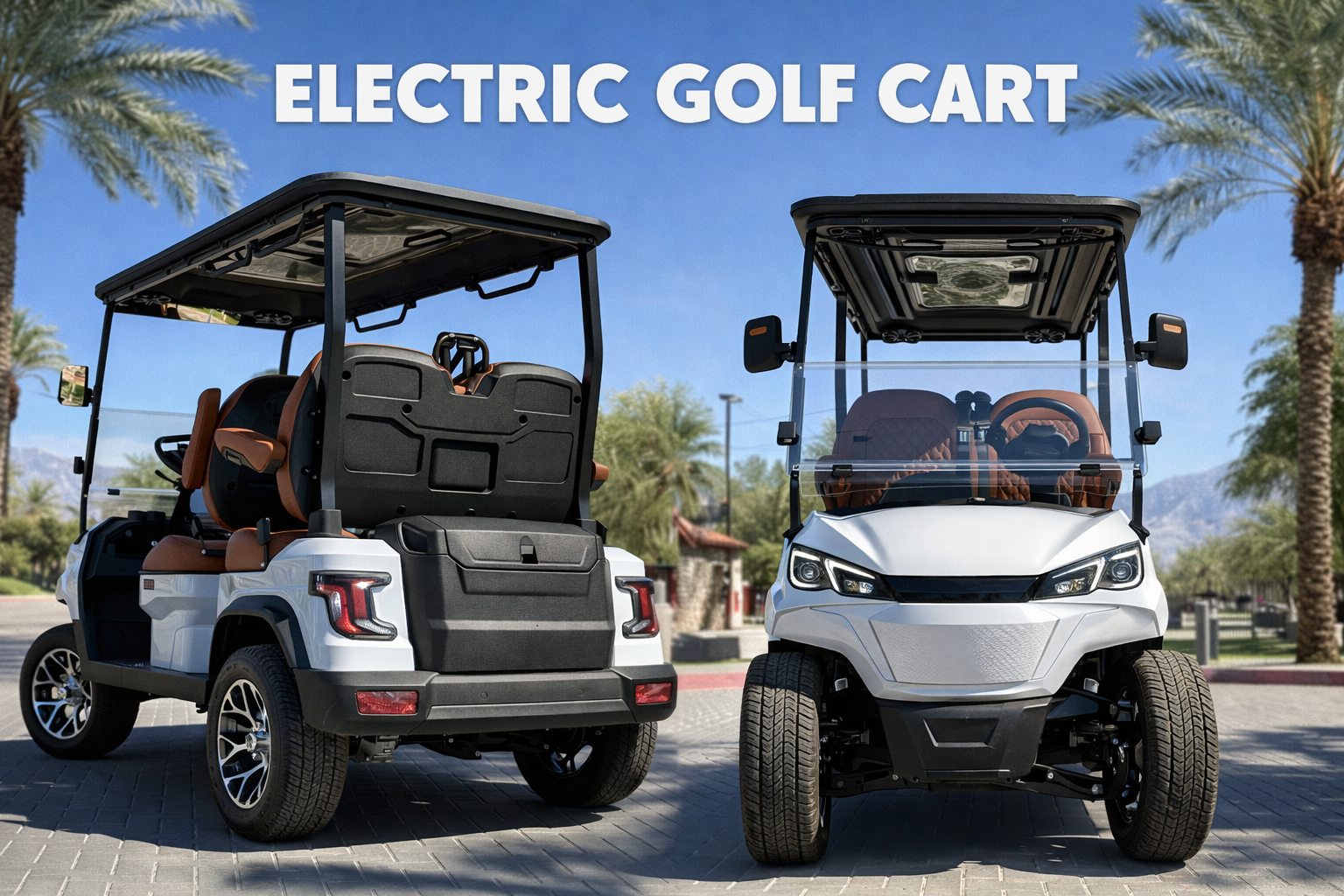
A noticeable shift is taking place in neighborhoods across the United States and globally: for short-distance travel, traditional cars are increasingly being replaced by golf carts. What was once considered a niche vehicle for golf courses is now becoming a practical, everyday transportation solution.
From quick grocery runs to school drop-offs, electric golf carts—especially street-legal low-speed vehicles (LSVs)—are redefining how people move within their communities.
Transportation data consistently shows that a large percentage of daily trips are under 5 miles. For these short journeys, using a full-sized car is often inefficient in terms of cost, energy, and convenience.
Golf carts are emerging as an ideal alternative, offering just enough speed and range for local travel while eliminating many of the downsides associated with traditional vehicles.
One of the primary drivers of this shift is cost. Golf carts are significantly more affordable than cars:
For many households, a golf cart serves as a cost-effective “second vehicle” dedicated to short trips.
Golf carts are designed for simplicity and ease of use. Their compact size makes them ideal for:
In planned communities where amenities are located nearby, golf carts often outperform cars in terms of convenience.
As sustainability becomes a global priority, consumers are actively seeking greener transportation options. Electric golf carts offer:
This makes them an attractive option for environmentally conscious users.
Golf carts are also influencing lifestyle trends. In many communities, they promote:
In retirement communities and resort areas, golf carts are no longer optional—they are essential.
Modern golf carts have evolved far beyond their traditional designs. Today’s models feature:
These innovations are making golf carts more capable and reliable for everyday use, further accelerating their adoption.
As demand grows, manufacturers are adapting to meet new consumer expectations. Lexsong is one of the emerging brands focusing on this transformation.
The company is developing electric golf carts designed not just for recreation, but for real-world mobility needs. Key features of Lexsong products include:
According to a Lexsong spokesperson:
“We’re seeing a shift in how people think about transportation. Golf carts are no longer limited to golf—they’re becoming a practical solution for everyday travel.”
By aligning product development with modern mobility trends, Lexsong is positioning itself as a key player in this growing market.
Despite their advantages, golf carts are not a complete replacement for cars. Limitations include:
However, for short-distance travel, many users find these limitations manageable.
The rise of golf carts as a substitute for short-distance car travel reflects a broader shift toward more efficient, sustainable, and localized transportation.
As technology continues to improve and infrastructure adapts, golf carts are expected to play an even greater role in everyday mobility.
In 2026, golf carts are no longer just a convenience—they are becoming a smart, practical choice for modern living.
 EN
EN
 AR
AR
 HR
HR
 CS
CS
 DA
DA
 NL
NL
 FI
FI
 FR
FR
 DE
DE
 EL
EL
 IT
IT
 JA
JA
 KO
KO
 NO
NO
 PL
PL
 PT
PT
 RO
RO
 RU
RU
 ES
ES
 SV
SV
 IW
IW
 ID
ID
 LV
LV
 LT
LT
 SR
SR
 SK
SK
 SL
SL
 UK
UK
 SQ
SQ
 ET
ET
 HU
HU
 TH
TH
 TR
TR
 FA
FA
 AF
AF
 GA
GA
 MK
MK
 KA
KA
 UR
UR
 BN
BN

